
4th Mar 2026
Digital Lace - How 3D-Printed Textiles Are Rewriting Couture Craft
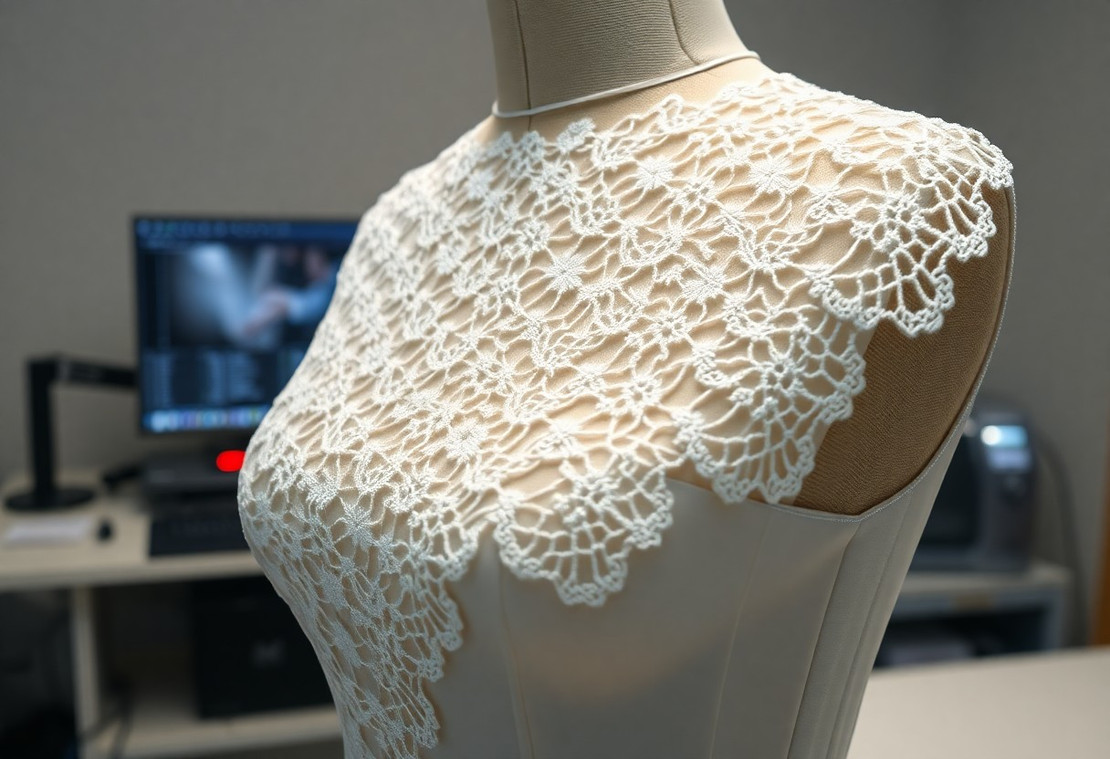
Just see how you can apply 3D-printed textiles to couture, enabling precise customization and material sustainability while confronting structural fragility and toxic residues, and mastering digital patterning for faster, exacting production.
Advanced Materials and Structural Integrity
Materials in 3D-printed textiles combine anisotropic lattices and graded stiffness to give you tailored support without added weight; failure shifts from seams to node points, so you must test print orientation and post-processing for consistent wear.
- Focus on node testing to locate common failure points under cyclic load.
- Map gradient stiffness across parts so you can tune comfort and support.
- Conduct environmental aging to check UV and moisture-induced degradation.
Material vs Performance
| Material | Characteristic |
|---|---|
| Thermoplastic polyurethane (TPU) | High flexibility, good fatigue resistance |
| PLA blends | Biodegradable but prone to brittleness and thermal creep |
| Bio-synthetic filaments | Tunably compostable with adjustable tensile properties |
Engineering Flexible Polymers for Fluid Drape and Movement
Polymer blends tuned for elongation let you 3D-print textiles that mimic silk drape while retaining shape; watch for strain softening at high stretch and adjust print paths to control recovery.
Bio-synthetic Filaments and the Future of Sustainable Fibers
Bio-synthetic filaments grown from microbes allow you to reduce waste and design biodegradable couture, but you must validate UV and moisture stability before production-scale use.
You should consider feedstock sourcing, microbial strain optimization and post-spin crosslinking to tune tensile strength and biodegradation rates; contamination risks demand clean bioprocessing and regulatory records. Manufacturers blend bio-filaments with thermoplastics to improve durability while preserving end-of-life compostability, giving you measurable lifecycle gains.

The New Atelier: Digital Craftsmanship
Atelier studios pair hand skill with code, so you refine couture using 3D-printed lace, digital embroidery, and robot-assisted finishing; these hybrid workflows deliver precision repeatability while exposing material brittleness and added post-processing demands.
Generative Design as the Modern Pattern Maker
Algorithms create parametric patterns that let you iterate intricate lace and lattice geometries rapidly, producing optimized strength-to-weight ratios while risking structural overfitting if constraints are misapplied.
Precision Tailoring through 3D Body Scanning and Customization
Scanners map your body's topology with sub-millimeter accuracy, letting you achieve bespoke fits that reduce alterations and returns, though they introduce biometric data risks requiring secure protocols.
You start with photogrammetry, LiDAR, or structured-light scans that capture posture and soft-tissue variance; these datasets feed parametric pattern systems so you adjust sleeve pitch, ease, and tension in minutes. Print samples in flexible TPUs or photopolymers for prototyping, then combine hand-finishing for couture touches. Benefits include sub-millimeter accuracy, faster turnaround, and reduced material waste; hazards center on stored biometric data, so you must enforce encryption, clear consent, and retention limits to stay compliant.
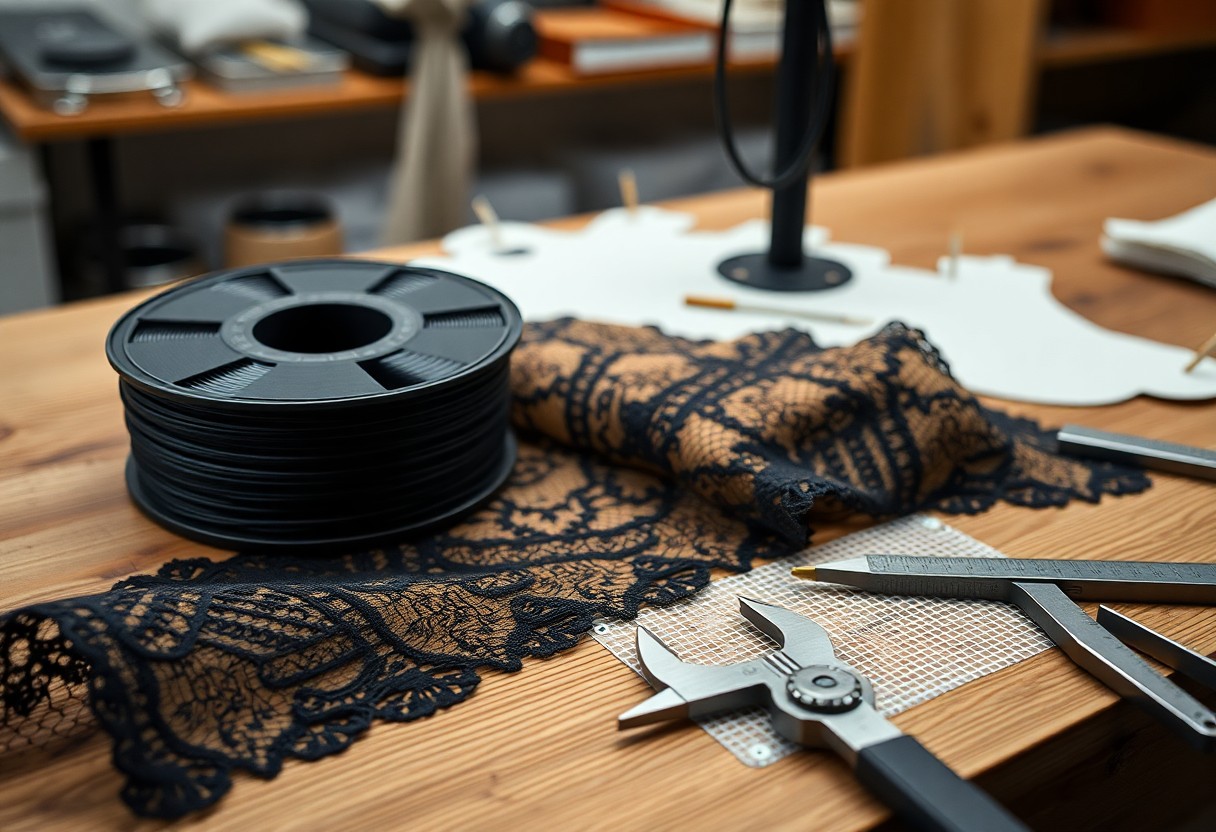
Redefining Aesthetic Boundaries
Designers now push couture beyond fabric, letting you wear intricate lattices, micro-perforations, and weight-optimized panels that sculpt silhouette and tactile experience in ways handcraft cannot match.
Complex Geometries Impossible for Manual Weaving or Knitting
Algorithms generate parametric meshes so you can produce interlocking geometries, graded densities, and micro-scale patterns impossible by hand, achieving precise structural behavior and novel drape control.
Kinetic Garments and Responsive Material Structures
Actuated modules let garments respond to touch, motion, or environment, enabling you to access programmable folds, dynamic openings, and on-demand shape shifts for performance and comfort.
Embedded sensors, micro-actuators, and smart polymers like shape-memory polymers let you tune stiffness, porosity, and form in real time; designers pair pneumatic actuation or low-voltage motors with compliant linkages so you can enjoy fluid motion without bulky mechanisms. Beware of pinch points, heat generation, and power dependency, which require redundant safety systems and clear user controls for safe wearability.
Economic and Cultural Implications for Haute Couture
Economics force you to weigh cost-saving automation against artisanal prestige, as couture brands balance margins with cultural value and the risk of commodifying heritage techniques.
Balancing Technological Automation with Human Artistry
Craft pushes you to integrate 3D precision without erasing handwork, preserving human artistry as the signature while cautiously adopting automated production.

Scaling Bespoke Production for the Global Luxury Market
Markets push you to scale bespoke 3D pieces globally through localized print hubs, ensuring customization, guarding intellectual property, and maintaining strict quality controls to avoid dilution.
Operationally you must build distributed micro-factories, train artisans to finish printed textiles, and protect designs with encrypted files so you can deliver true customization at scale. Benefits include reduced lead times and material savings; biggest threats are IP theft and inconsistent artisanal finishes.
To wrap up
Drawing together innovation and tradition, you witness 3D-printed textiles redefine couture craft by enabling precise geometry, waste reduction, and on-demand customization, allowing you to tailor fit, surface, and structure while retaining handcrafted techniques and material tactility.
FAQ
Q: What is "digital lace" and how are lace-like textiles created with 3D printing?
A: Digital lace describes intricately patterned, often flexible textiles generated from digital models and produced by additive manufacturing. Designers build parametric patterns or import scanned geometry into CAD software, then convert the surface into a printable mesh with specific filament thickness, hinge points, and perforations that mimic lace. Common fabrication methods include selective laser sintering (SLS) using nylon (PA12) for fine, flexible lattices; stereolithography (SLA) and digital light processing (DLP) for high-resolution resin parts; multi-jet fusion (MJF) for consistent detail and strength; and fused deposition modeling (FDM) with flexible TPU for stretchable elements. Print orientation, support strategy, and slicing settings control surface finish, anisotropy, and interlocking joints. Post-processing steps often include media blasting or washing to remove powder or resin, thermal annealing to relax stresses, dyeing or plating for color and sheen, and mechanical assembly or stitching when printed panels are combined with traditional fabrics.
Q: In what ways are 3D-printed textiles changing couture design and craft, and what limitations remain?
A: 3D-printed textiles introduce new forms of customization, structural complexity, and material expression that reshape couture techniques. Body scanning and parametric patterning allow designers to produce garments that conform precisely to individual anatomy, create continuous lattices that act as both ornament and support, and realize geometries impossible with hand-cut fabric. Collaboration between digital modelers and atelier artisans creates hybrid workflows where printed components are hand-finished, embroidered, or integrated into tailored constructions. Constraints still include material comfort and breathability for extensive coverage, print duration and cost for high-resolution pieces, limited stretch compared with woven textiles in many printed polymers, and the learning curve for pattern-makers adapting to algorithmic rules. Production scaling for full-collection output remains expensive compared with traditional mills, while each technique demands specific expertise in design-for-additive-manufacturing to avoid brittle features or weak joints.
Q: What should designers and wearers know about care, durability, sustainability, and intellectual property for digital lace?
A: Care instructions depend on the polymer and print process: nylon SLS parts tolerate gentle machine washing and low-heat drying, flexible TPU benefits from hand washing and air drying, and resin parts often require careful solvent cleaning and avoidance of prolonged UV exposure. Small breaks can be repaired with adhesives, mechanical replacements, or reprinting modular components rather than replacing entire garments. Environmental trade-offs vary by material and workflow; nylon powders can be recycled and reclaimed in some workflows while many photopolymers have limited recyclability and require special disposal. On-demand printing can reduce overproduction and shipping emissions by enabling local, made-to-measure pieces, but energy use and unused support material raise lifecycle impacts. Designers should protect digital patterns through version control, contracts, and technical markers in files; distribution models such as limited-access file repositories or licensed manufacturing partners can reduce unauthorized replication while preserving collaboration between craft ateliers and digital studios.