
30th Jan 2026
Draped Silhouettes: Cutouts Out, Flowing Fabrics In 2026
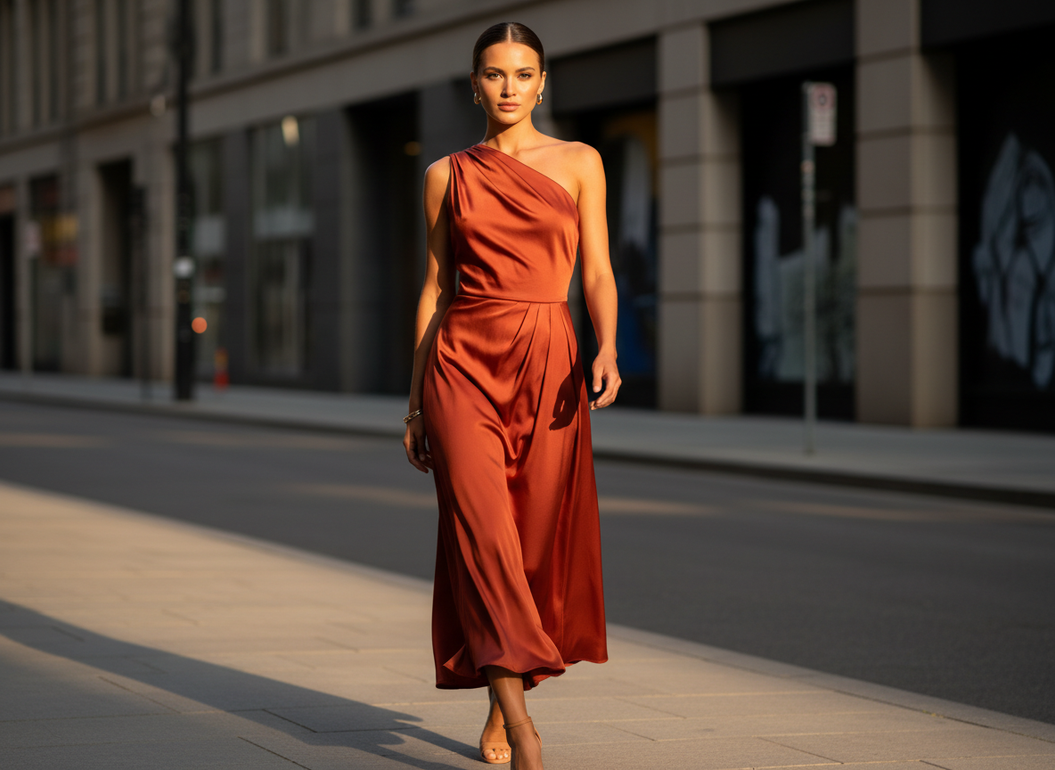
Fashion’s mood shift is showing up in a very specific place: the middle of the outfit. After a long run of exposed skin, sharp negative space, and “look-at-me” cutouts, the pendulum is swinging back toward something that feels just as sensual—but far more wearable: drape. Think liquid skirts that move when you walk, tops that skim instead of squeeze, and dresses that look styled even when you barely tried. Draped silhouettes don’t shout; they glow. And right now, that’s exactly the point.
Drape is also one of the easiest ways to look elevated without stacking on trend clichés. It adds dimension, creates shape without stiffness, and photographs beautifully from every angle because it’s designed to catch light and motion. If cutouts were about bold punctuation, drape is about a full sentence—fluid, intentional, and quietly powerful.
Why drape is winning right now
Cutouts aren’t “bad,” but they’re increasingly feeling high-maintenance. They demand specific bras, strategic tape, constant adjusting, and sometimes a level of “am I flashing someone?” anxiety that doesn’t fit real life—workdays, travel days, dinners that involve actually eating dinner. Draping, on the other hand, gives that same body-celebrating vibe with a softer edge. It suggests shape without requiring exposure.
There’s also a bigger aesthetic change happening: silhouettes are getting more touchable. People are craving texture, movement, and pieces that feel lived-in rather than engineered. Draped clothing answers that by creating interest through folds, gathers, and asymmetry—details that read expensive because they look like design, not decoration.

The anatomy of a draped silhouette (and why it flatters)
“Draped” is a broad category, but the best draped pieces usually rely on a few core techniques:
- Cowl necklines: Fabric falls into a soft curve at the chest, creating instant elegance. A cowl can feel subtly sultry without showing much skin.
- Wrap construction: Wrap tops and skirts let you adjust fit, define the waist, and create diagonal lines (diagonals are incredibly flattering on almost everyone).
- Ruching and gathering: Strategic gathers—especially at the waist, hip, or side seam—create shape and camouflage in the most modern way possible.
- Bias cuts: Fabric cut on the diagonal drapes closer to the body and moves like liquid. Bias pieces don’t cling the way tight knits do; they skim.
- Asymmetry: One-shoulder shapes, angled hems, and draped panels add drama through architecture rather than exposure.

The magic is that drape creates visual contouring. It highlights movement, defines a waist (even when the garment isn’t tight), and brings attention to the overall line of the outfit—not just a single body part.
Key pieces to build the trend into your closet
If you want to lean into “flowing fabrics in,” these are the easiest entry points:
1) The draped midi dress
A ruched side seam, a wrap front, or a soft one-shoulder drape gives you maximum impact with minimal styling. It works for dinners, events, and even daytime with the right shoes.
2) The cowl-neck top
This is the fastest way to upgrade your basics. A cowl top (in satin, jersey, or a matte crepe) instantly reads intentional. It’s also a great “going-out” alternative to anything with cutouts.
3) The wrap skirt
Wrap skirts are a drape cheat code: adjustable, waist-defining, and always in motion. Look for midis with overlap and a slightly heavier fabric that won’t fly open with every gust of wind.
4) Draped outer layers
A soft trench with a belt, a cape-like wrap coat, or a long cardigan with weight gives you that “styled” look without rigidity. Draped outerwear is especially good if you want drama but don’t want to feel overdressed.
5) Scarves used as styling tools
A lightweight scarf can become a shoulder drape, a waist tie, or a bag accent—micro-styling that makes an outfit feel editorial.
Styling formulas (easy, repeatable, no overthinking)

If you want drape to feel modern—not costume-y—anchor it with clean, simple pieces.
Daytime polish
- Draped skirt + fitted tee or fine-knit tank + flat sandals
Keep the top simple so the drape reads as the “statement.” Add gold jewelry for glow.
Office-ready
- Cowl blouse + tailored trousers + structured blazer
This is the grown-up version of sexy: soft at the neckline, sharp everywhere else. Choose matte fabrics if your workplace is conservative.
Date-night energy
- Ruched dress + minimal strappy heels + sleek hair
Let the dress do the talking. Drape already adds movement—don’t overcrowd it with loud accessories.
Event / wedding guest
- One-shoulder draped dress + metallic clutch + sculptural earrings
Drape photographs beautifully when you’re walking, dancing, or turning—perfect for candid photos.
Cold-weather layering
- Bias skirt + tall boots + chunky sweater half-tucked
The contrast (fluid skirt + cozy knit) keeps the look modern and not overly “occasion.”
Fit tips: how to make drape look expensive (not sloppy)
Draped clothing walks a fine line: it should look fluid, not wrinkled; intentional, not accidental. Here’s what matters:
- Prioritize fabric weight. Ultra-thin satins can look clingy or cheap. Mid-weight satin, crepe, jersey, and lined fabrics drape better and wear longer.
- Check the anchor points. Great drape has structure somewhere—at a shoulder seam, a waist seam, or a wrap tie. If there’s no anchor, it can read shapeless.
- Mind the length. Midi lengths are the sweet spot for drape because they show movement. Too short can look bunchy; too long can feel heavy unless the fabric is luxe.
- Undergarments matter. Smooth underlayers help the fabric fall cleanly. Seamless options prevent the drape from “catching” on lines underneath.
- Tailoring is your friend. A tiny tweak—hem length, strap adjustment, waist placement—can take drape from “pretty” to “custom.”
Drape is also surprisingly inclusive: it can highlight curves, create curves, soften angles, and add shape without squeezing. The best approach is to choose where you want the garment to define you (waist, shoulder, neckline) and let everything else flow.
What to type into search bars (so you actually find the right pieces)
If you’re shopping online, “draped” alone can be messy. Try these more specific keywords:
- “ruched side dress”
- “one shoulder draped dress”
- “cowl neck satin top”
- “wrap midi skirt”
- “bias cut skirt”
- “draped neckline jersey dress”
- “gathered waist dress”
- “asymmetric drape hem”
And if you’re trying to avoid the cutout-heavy version of “sexy,” add: “minimal,” “no cutout,” “lined,” or “high neckline” to your searches.
The takeaway
Draped silhouettes are the kind of trend that doesn’t feel like a trend—because it’s rooted in good design: movement, proportion, and ease. It’s romantic without being precious, sensual without being complicated, and polished without being stiff. If you’re tired of outfits that require constant adjusting (or constant confidence), drape is the answer: flowing fabrics, flattering lines, and a look that moves with you—everywhere you actually go.