
25th Mar 2026
Effortless Architecture - How to Master the Draped Aesthetic

Effortless draped forms show you how to combine lightweight textiles, tensioned frames, and calculated openings to shape airy exteriors; you must heed structural limits and avoid overloading to prevent failures, while celebrating soft, sculpted silhouettes.
The Philosophy of Fluid Form
Flowing drape asks you to trust gravity as a design partner, using soft planes to define space while you manage tension and proportion; avoid collapse by pairing drape with discreet supports and measured scale.
Historical origins of the draped silhouette
Ancient sculptural drapery shows you how folds read light and volume; studying reliefs and textiles teaches proportion and ceremonial scale so you can borrow timeless cues without resorting to mere ornament.
Defining the balance between structure and ease
Tension between support and softness forces you to choose anchor points that preserve lightness while the frame provides necessary structure, ensuring drape reads intentional rather than accidental.
Practical approaches ask you to test materials at full scale, mark natural fall lines, and place strategic anchors or concealed ribs where loads might cause overloading; maintain sightlines and access for upkeep so the effect stays elegant and durable.

Material Selection and Textile Dynamics
Selection of textiles dictates how your forms fold and flow; you must balance drape, tensile strength, and environmental response to predict performance. Choose fabrics that hold intended curves without sagging while permitting controlled movement.
Understanding drapeability and fabric weight
Drapeability depends on fiber, weave, and weight; you test samples at scale to observe hang and fold. Lighter weights yield fluid, continuous folds, while heavier weights give defined pleats that resist flutter-use weight to tune motion.
The role of natural fibers in architectural movement
Natural fibers add warmth and tactile variation while offering breathability and biodegradability; you should consider moisture sensitivity and shrinkage that alter long-term drape.
Because natural fibers respond to humidity and UV, you must plan for dimensional changes and routine maintenance. You can combine cotton or linen for soft, luminous folds with hemp or wool for tensile strength; apply surface treatments to mitigate fire risk and mold, preserving biodegradability and tactile appeal.
Core Draping Techniques
You refine draping through tension, placement and fabric memory, balancing scale and movement to create textural harmony while avoiding overhandling that can distort shapes or waste material.
Mastering the bias cut for organic flow
Cutting on the bias lets you coax fabric into natural curves, but you must monitor grain and stretch to avoid permanent distortion or wasted yardage.
Strategic pleating and soft-sculpture methods
Pleating sculpts volume and direction, so you test depth and spacing to prevent bulk, uneven tension and thread breakage during wear.
Experiment with varying pleat angles, press sequences and interfacing choices; you can use graded pleats for tapering volume, hand-stitch anchoring to control mobility, and soft padding to keep sculptural shapes without rigid structure.
Achieving Proportional Harmony
Balance your draped forms by measuring key axes so you keep visual proportion and avoid bulky clusters; you use negative space and repeated intervals to guide the eye and preserve an elegant silhouette.
Managing volume while maintaining the frame
Use selective padding and controlled folds so you create fullness without breaking the underlying frame; keep clear edges and reduce excess near joints to protect structural lines.
Creating visual interest through asymmetry
Introduce offset folds and staggered hems so you create tension without chaos; set a single dominant sweep opposite subtle details to anchor the composition.
Experiment with scale contrasts-tiny tucks beside broad sweeps-so you guide focus while keeping intent; keep an asymmetric anchor and vary material weight near focal points to modulate light and shadow without compromising the frame.
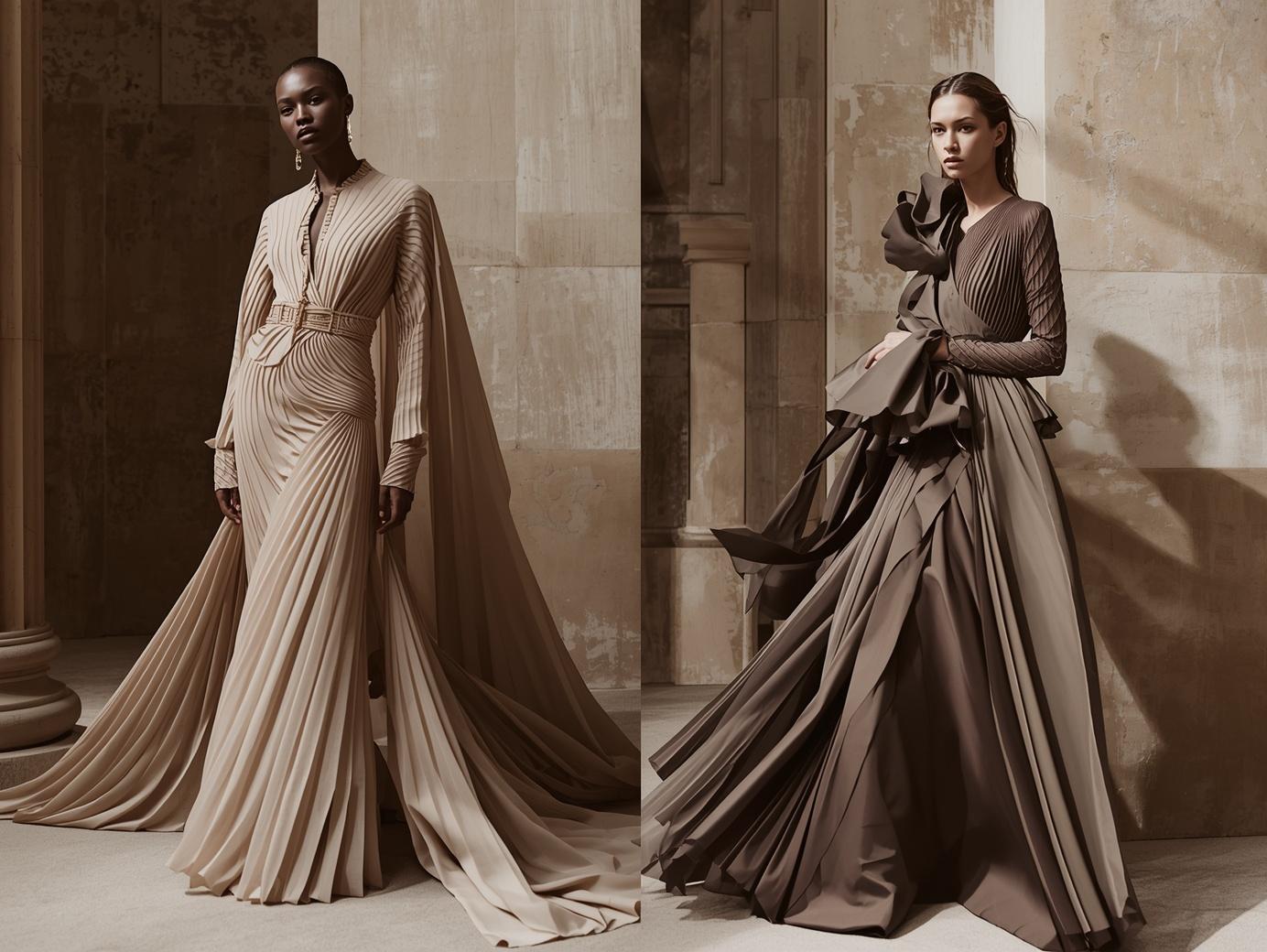
Styling the Draped Aesthetic
Balance accessories and fabric weight so the drape remains the focal point; let one statement piece shine and keep the rest muted to avoid visual clutter that flattens your silhouette.
Minimalist approaches to accessorizing
Opt for restrained pieces that echo drape lines; you should choose a single focal accessory and avoid over-accessorizing to preserve fluidity and proportion.
Footwear and the grounded silhouette
Anchor draped looks with low, stable shoes; you should select chunky boots or platforms to balance volume and avoid flimsy heels that disrupt your grounded silhouette.
Consider how sole thickness and heel height change the perceived weight of draped garments: thick soles and block heels visually anchor billowy fabrics, while slender stilettos can undermine proportions and become a trip hazard. You should walk in candidates to check hem catch and balance; prefer muted tones and tactile finishes to keep the silhouette cohesive.
Care and Preservation of Fluid Garments
Your maintenance keeps drape and form intact: you should rotate garments, air them after use, and shield fabrics from direct sun; store pieces padded or flat to preserve folds and address stains quickly to avoid set-in damage.
Storage techniques to maintain structural integrity
Use breathable garment bags, padded hangers or flat boxes; you should pad folds with acid-free tissue and avoid wire hangers that distort shapes, keeping items upright and unstressed to maintain sculptural drape.
Specialized cleaning for delicate folds
Avoid machine cycles that crush pleats; you should pre-test detergents, use cold water and gentle agitation, and favor professional wet-cleaning when folds are complex; never expose pieces to hot water or tumble drying.
If you clean at home, spot-test on a hidden seam and use pH-neutral solutions, then gently blot stains rather than rubbing; you should rinse thoroughly in cold water, reshape while damp, steam from the reverse side, and consult a conservator for couture or heavily structured folds to avoid irreparable distortion.
To wrap up
To wrap up you can master the draped aesthetic by refining material flow, proportion, and light; apply subtle textures, disciplined restraint, and practical details so spaces read as intentional, elegant, and livable.