
16th Feb 2026
Precision Pleats - Sculpted Volume Takes Center Stage
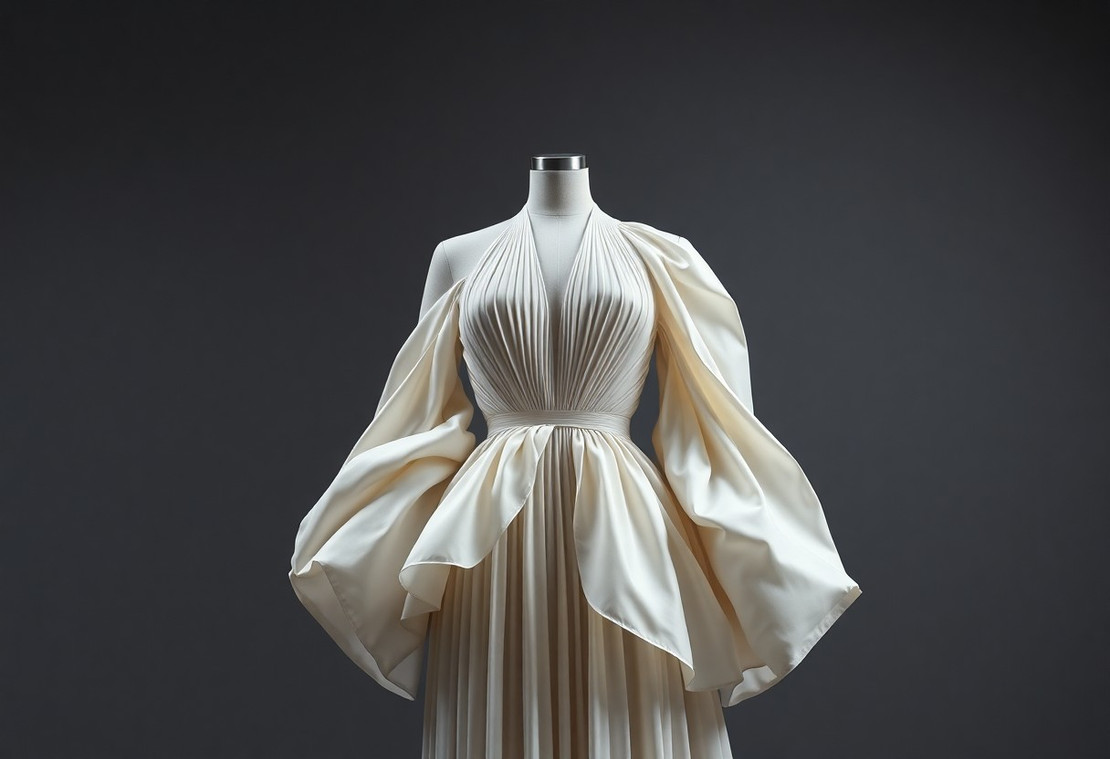
You master pleat placement and tension to sculpt fabric; precision defines silhouette, misaligned pleats can tear seams under stress, and consistent spacing yields dramatic, lasting volume.
The Evolution of Pleating Techniques
Evolution in technique moved pleating from artisanal folding to engineered systems, so you now use precision to sculpt repeatable volume while preserving handlike movement.
Pleating improved as new materials and needs changed, leading you to use heat-setting, programmable molds, and control over tiny structures to adjust shape and flow while keeping it comfortable to wear.
Historical Roots and the Fortuny Legacy
Historical practice shows how early pleaters used simple tools to make complicated shapes, and you can trace modern proportioning back to those cost-effective methods.
Fortuny introduced a heat-and-pressure method that fixed folds in silk; you should note that Fortuny's technique established patterns of tessellation still copied today, even as silk can scorch if mishandled.

Contemporary Shifts in Fabric Manipulation
Contemporary makers combine traditional folding with digital patterning so you can program depth and pitch, using synthetic blends to retain shape across repeated wear.
Fabric science supplies thermoplastic fibers and shape-memory yarns that let you lock volume, yet you must avoid overcoating, since excess finishes cause stiffness or increased microplastic shedding.
Modern studios marry CNC pleating molds with careful hand finishing so you can preserve subtle irregularities while achieving industrial accuracy, giving garments a striking, controlled volume suitable for both runway and retail.
The Geometry of Sculpted Volume
Angles dictate how you carve planes and voids, letting light reveal the sculpted volume you intend. You must map fold intersections to control silhouette while monitoring stress concentrations that can lead to material fatigue or sudden failure.
Mathematical Precision in Fold Placement
Geometry supplies the rules you apply: calculated angles, proportional spacing and repeatable vectors that produce consistent volume. You should verify tolerances empirically to prevent material failure at hinge points while maintaining symmetry and intended optical tension.
Balancing Structural Rigidity and Fluidity
Tension between stiffness and drape determines how you distribute folds; choosing depth and ply creates structural hold without sacrificing perceived motion. You must anticipate load paths and avoid localized bending that would cause tearing.
Experimentation with graded thickness, micro-slots and laminated edges lets you tune responses: small reliefs reduce peak stress, while reinforced ribs preserve form. You can prototype rapidly to confirm both durability and expressive intent.
Precision Pleats—Sculpted Volume Takes Center Stage
Heat-setting locks pleat geometry into modern fibers so you can depend on consistent memory across production runs; monitor dwell time and temperature to prevent fiber scorching or sheen loss.
Manufacturers combine engineered yarns with low-temp resins so you can achieve deep, stable volume with shorter cycles and test batches to balance pleat depth against hand and drape.
- Set temperature curves for each material family.
- Select resin finishes based on desired longevity.
- Implement safety protocols to limit worker exposure.
Material vs Effect
| Material | Effect |
|---|---|
| Polyester blends | Holds sharp pleats with minimal shrinkage |
| Modified nylon | Offers soft sheen and sustained volume |
| Resin finishes | Controls recovery and wash-fastness |
Synthetic Innovations for Permanent Definition
You will notice that new copolymers and cross-linking agents provide permanent definition while reducing the required heat; however, it is important to ensure proper ventilation and use personal protective equipment (PPE) due to solvent and curing fumes.
The Role of Laser-Cutting in Precision Design
Laser-cutting trims and scores patterns so you can create exact fold lines and micro-pleats; watch for thermal fringe that can thin fibers if power is too high.
Precision control of power, speed, and focal distance lets you produce consistent edge quality and decorative perforations, and you should always run sample patches to confirm settings before full runs.

Precision Pleats—Sculpted Volume Takes Center Stage
Runways now showcase pleating techniques that sculpt dramatic, architectural volume, so you assess how silhouette interacts with movement and light.
Spectacles require you to balance exaggerated forms with wearability, noting that structured pleats can add striking presence but also introduce weight and tension risks.
Avant-Garde Approaches to Dimensionality
Experimentation pushes you to combine unexpected materials and fixed pleating to create pieces that read as sculpture on the body, with innovative textures and provocative profiles.
Material selection guides you toward synthetic membranes or coated silks that hold sharp folds; you should be aware that rigid fabrics amplify drama while increasing maintenance demands.
Enhancing Movement through Engineered Folds
Precision in fold placement allows you to choreograph motion, so garments expand and contract predictably, producing controlled flutter and amplified stride effects.
Mechanical supports like stay tapes and hidden boning help you sustain volume during movement, though they add complexity and potential points for wear.
Testing prototypes on moving bodies teaches you where pleats must soften or lock, and targeted reinforcement prevents failures without sacrificing the design's intended kinetic impact, marking maintenance hotspots and performance wins

The Craftsmanship of Specialized Pleat Styles
You will find that specialized pleats demand attention to grain, tension, and finish; skilled handling transforms simple folds into architectural forms. Pay attention to precision in spacing and press depth to achieve a consistent rhythm, and watch for fabric stress that can weaken panels over time.
Precision in technique lets you tailor volume and movement to a design intent, choosing micro-creases for delicacy or deep folds for dramatic shape. Use quality tools and test settings to protect fabric integrity while preserving the intended silhouette.
Mastering Knife, Box, and Accordion Variations
Knife pleats give you clean directionality and compact volume; you must align each fold and apply a firm, even press to lock the crease. Protect delicate fibers by testing heat and always mind heat sensitivity when finishing.
Box pleats offer structured fullness, while accordion pleats create springy, repeated rhythm; you will balance depth against bulk to control movement. Emphasize sculpted volume with consistent spacing and careful seam integration for long-term wear.
Hand-Folding versus Industrial Pressing
Hand-folding rewards you with nuanced control and tailored adjustments, making it ideal for couture or unusual fabrics; accept the slower pace as part of the artisan touch, and mitigate repetitive strain through ergonomic technique.
Industrial pressing delivers rapid, repeatable results for production runs, but you must monitor settings closely to avoid high-heat risk and unintended fabric memory. Calibrate equipment and document recipes for each material.
Safety practices require you to run test swatches, wear protective gloves when handling hot tools, and maintain regular machine inspections to reduce burn risk and mechanical failure.
Sustainability and Precision Manufacturing
Sustainability in precision pleating asks you to assess material inputs and production energy; you rely on digital control to cut cycles and reduce offcuts. When you integrate automated pleat machines, you can achieve measurable reductions in textile waste and lower water and chemical use, keeping sculpted volume efficient and responsible.
Minimizing Textile Waste through Digital Patterning
Digital patterning lets you nest pleat modules precisely so fabric use increases and scrap falls; your files produce repeatable cuts and dramatically less waste compared with manual layouts. You can also simulate grain and stretch to avoid errors before the blade touches cloth.
Longevity and Durability of Sculpted Forms
The structure of pleats depends on material selection and precision heat-setting; when you choose high-quality fibers and secure pleat memory, pieces hold shape through wear and washing, yielding extended garment life and reduced replacement rates.
Testing protocols you implement—tensile, abrasion, and repeated laundering—prove sculpted forms resist collapse, and you can document performance with lab data and care instructions to support warranty claims and premium pricing.
Precision Pleats—Sculpted Volume Takes Center Stage
On the whole, you should prioritize crisp folding and strategic placement to create volume that commands attention. You will achieve versatile silhouettes by varying pleat depth, fabric weight, and pressing technique, producing structured movement without bulk. You can maintain the effect with gentle steaming and targeted reinforcement at stress points to preserve form and longevity.