
25th Feb 2026
Subversive Corporate - Power Dressing with Deconstructed Tailoring
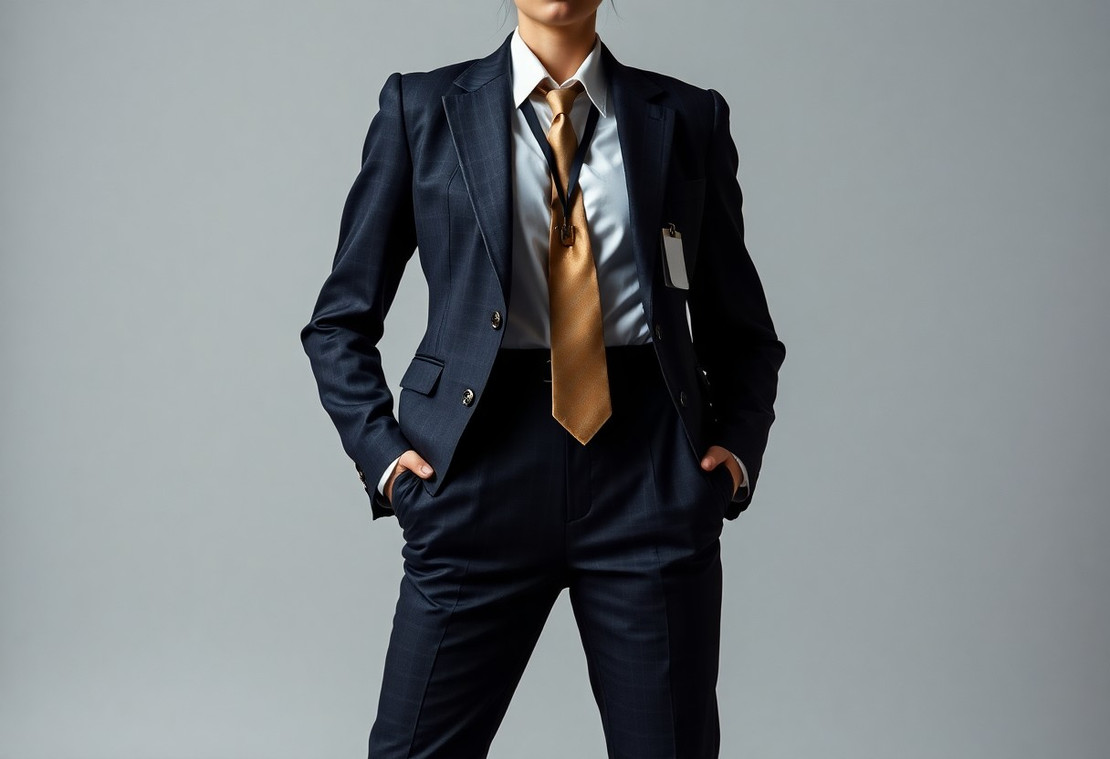
There's a new power dress code where you adopt deconstructed tailoring, accepting career risk while gaining disciplined confidence that signals authority and subverts corporate norms.

The Evolution of Corporate Power Dressing
Corporate power dressing has shifted from rigid signaling to strategic self-presentation, so you now read cues in tailoring and materials that signal both authority and calculated subversion.
Historical Foundations of the Professional Uniform
Tradition shows how uniforms once enforced hierarchy, so you learned to associate crisp cuts and muted palettes with corporate trust and risk avoidance.
The Shift Toward Individual Agency and Expression
Style trends pushed you to modify silhouettes and integrate personal motifs, turning suits into instruments of agency that challenge conventional professional codes.
Modern iterations let you appropriate deconstructed tailoring—raw hems and off-kilter seams—to assert authenticity while signaling professional competence. This approach carries risk when codes clash with conservative workplaces, so you must calibrate bold details against client expectations. Adopting asymmetry or unexpected fabrics can amplify your power without abandoning respectability.
Defining the Subversive Corporate Aesthetic
Bold deconstructed lapels and exposed seams show how you repurpose corporate codes into a subversive uniform, using visible construction to claim presence and unsettle expectations.
Reclaiming Authority Through Visual Non-Conformity
You co-opt shoulder pads, precise tailoring, and matte hardware, then invert them with asymmetry and raw edges to signal authority while refusing predictable deference.
The Intersection of High Fashion and Utility
Practicality meets couture when you integrate cargo pockets, harness straps, and technical fabrics into tailored silhouettes, producing functional elegance that resists mere ornament.
Experimentation with materials like GORE-TEX, waxed cotton, and fine worsteds lets you combine weatherproof performance with polish; modular panels and detachable hems change silhouette and use, while hidden pockets and reinforced seams deliver real utility, keeping your presentation professional yet deliberately provocative and prone to provoke conversation or scrutiny.

The Mechanics of Deconstructed Tailoring
You examine how seams are undone, darts redirected and pattern lines rewritten so tailoring becomes a language of subversion; the result is controlled disorder that gives you an authoritative silhouette while exposing construction.
Asymmetry and the Distortion of Traditional Silhouettes
Asymmetry warps expectations so you wear imbalance as strategy, producing disrupted silhouettes that read as deliberate authority rather than accident.
Raw Edges, Exposed Seams, and Structural Vulnerability
Raw edges and exposed seams make construction legible, forcing you to negotiate structural vulnerability and visible repair as aesthetic statements.
Exposed seams reveal stitch direction and tension, so you can read where garments were stressed or repaired; fraying becomes a deliberate texture while unraveling reads as a political act. You balance visible fragility with selective reinforcement linings, internal supports or hand-stitched mends to keep wearability intact without erasing the garment’s honesty.
Essential Elements of the Modern Power Wardrobe
You favor sharp cuts, high-quality fabrics, and structured silhouettes that convey authority, tempered by deconstructed accents like raw hems and exposed seams. Keep accessories minimal and prioritize functional details for practical dominance.
The Reimagined Blazer and Oversized Proportions
Blazers reworked in oversized cuts let you command space: broadened shoulders, unexpected lapels, exposed hardware, and adjustable waists rewrite authority while retaining tailored lines.
Avant-Garde Trousers and Multi-Functional Layering
Trousers oscillate between sculpted tapers and wide legs so you gain mobility; incorporate hidden pockets, modular panels, and convertible hems to enable multi-functional layering that shifts silhouette and use.
Pairing technical wools, neoprene, or coated cotton gives you structure and stretch; seek gussets, articulated knees, and zip-off panels for convertible proportions. Choose finishes like exposed zippers and slashed pockets to add edge, but you should balance dramatic trousers with cleaner tops to avoid overwhelming your frame.
Materiality and the Textural Language of Subversion
Textures signal intent in deconstructed tailoring; you read abrasion-resistant blends against worn wool, where surface choices map authority, threat and quiet defiance.
High-Performance Fabrics vs. Traditional Wool
Compare sleek synthetics and heritage wool: you accept moisture-wicking agility and stain resistance in exchange for wool’s weighty presence while noting the impact of chemical treatments.
The Role of Drapery in Softening Power Structures
Drapery reframes dominance through folds you arrange to suggest vulnerability, using subtle volume to blur sharp lines without forfeiting command.
When you deploy layers of drapery, movement and silhouette become negotiation tools: choose heavier knits for protective mass or sheer silks to court exposure, and calibrate strategic volume against tailored anchors so softness reads as deliberate authority, not concession.
Navigating Professionalism with Experimental Style
You temper avant-garde tailoring with workplace norms by choosing subtle asymmetry and muted palettes; the impact reads as confident, not chaotic, when proportions are controlled and fabric choice signals professionalism.
Balancing Visual Impact with Corporate Etiquette
Consider dialing visual statements to meet company expectations: choose one bold element, keep the rest streamlined, and avoid attention‑grabbing logos that clash with etiquette.
Strategic Use of Footwear and Minimalist Hardware
Select footwear and accessories that anchor experimental suits: low‑profile heels or polished loafers maintain authority, while minimalist hardware keeps the look modern without violating dress codes.
Focus on proportion and material: chunky shoes can overwhelm deconstructed jackets, while sleek soles refine silhouettes. Choose metals in a single finish, limit ornamentation, and test outfits in real meetings to gauge the risk versus reward of bold details.
Summing up
Considering all points, you adopt subversive corporate power dressing through deconstructed tailoring that asserts authority while signaling rebellion: pair structured blazers with asymmetric hems, exposed seams, and precise cuts to create a confident, modern silhouette that challenges convention.
FAQ
Q: What does "Subversive Corporate—Power Dressing with Deconstructed Tailoring" mean?
A: Subversive Corporate fuses traditional power-dressing cues—strong shoulders, clean lines, authoritative color palettes—with deconstructed details like raw hems, exposed seams, asymmetric cuts and reworked proportions. The approach preserves a professional silhouette while introducing intentional imperfections that read as design choices rather than wear. Designers and wearers select high-quality suiting fabrics and surgical tailoring techniques so garments retain structure even when elements are undone or offset. The aesthetic signals confidence and design awareness while quietly challenging uniform corporate codes.
Q: How can I style deconstructed tailoring so it remains appropriate for professional environments?
A: Choose one deconstructed focal point per outfit, for example an asymmetric blazer or a blazer with an unfinished lapel, and pair it with classic, well-fitted pieces to keep the overall look polished. Anchor outfits in neutral palettes such as navy, charcoal, black or camel so attention lands on line and proportion rather than loud color. Ensure fit is precise at the shoulders and waist so deconstruction reads as intention, and balance volume by pairing oversized tops with slim trousers or structured skirts. Opt for minimal, structured accessories and clean footwear to preserve authority while signaling modernity.
Q: Where should I shop, or how do I commission deconstructed pieces, and how do I care for them?
A: Look to independent designers, avant-garde ready-to-wear labels, and bespoke tailors who specialize in experimental suiting or upcycled garments; request sample photos and construction notes before purchasing. When commissioning, specify which elements should remain raw and which need reinforcement, ask for internal supports like selective interfacing, and request stress-point reinforcement to prevent premature wear. Care instructions depend on fabric: wool and structured suiting often require professional cleaning and careful steaming, cotton blends tolerate gentle home care, and exposed edges may need occasional hand-stitching. Choose subtler deconstruction in conservative workplaces and reserve bolder experiments for creative settings or dress-down days.